
Sleep and Obesity
We all know that overconsuming food, especially the highly processed, high fat high sugar foods so prevalent in our society, results in weight gain and, if consumed consistently and long enough, obesity. In fact, with the advent of the remarkably effective GLP-1 agonist pharmacotherapies, it appears relatively clear that if we are able to reduce our food consumption, we will lose weight.* However, it can be extremely difficult to simply “eat less,” particularly for individuals with a high level of food noise, persistent and compulsory thoughts about food and eating that do not go away when an individual is satiated. Much of the effectiveness behind GLP-1 agonists stems from the ability of these drugs to prevent hunger—by slowing gastric emptying, stimulating insulin release, and working in the brain to reduce the rewarding value of food, GLP-1 agonists are able to abolish our biological drive for food. But could there be another, non-pharmacological, way to manage our hunger?**
What if I told you that there is a deeper layer to the cause of obesity, beneath the consumption of highly palatable foods—what if we are overconsuming sugary and fatty foods because we are, as a nation, grossly sleep deprived?
The following graphs show the correlating decrease in sleep duration (Xu et al., 2024; Sheehan et al., 2018) and increase in obesity (NIDDK, n.d.) over the past couple of decades.***
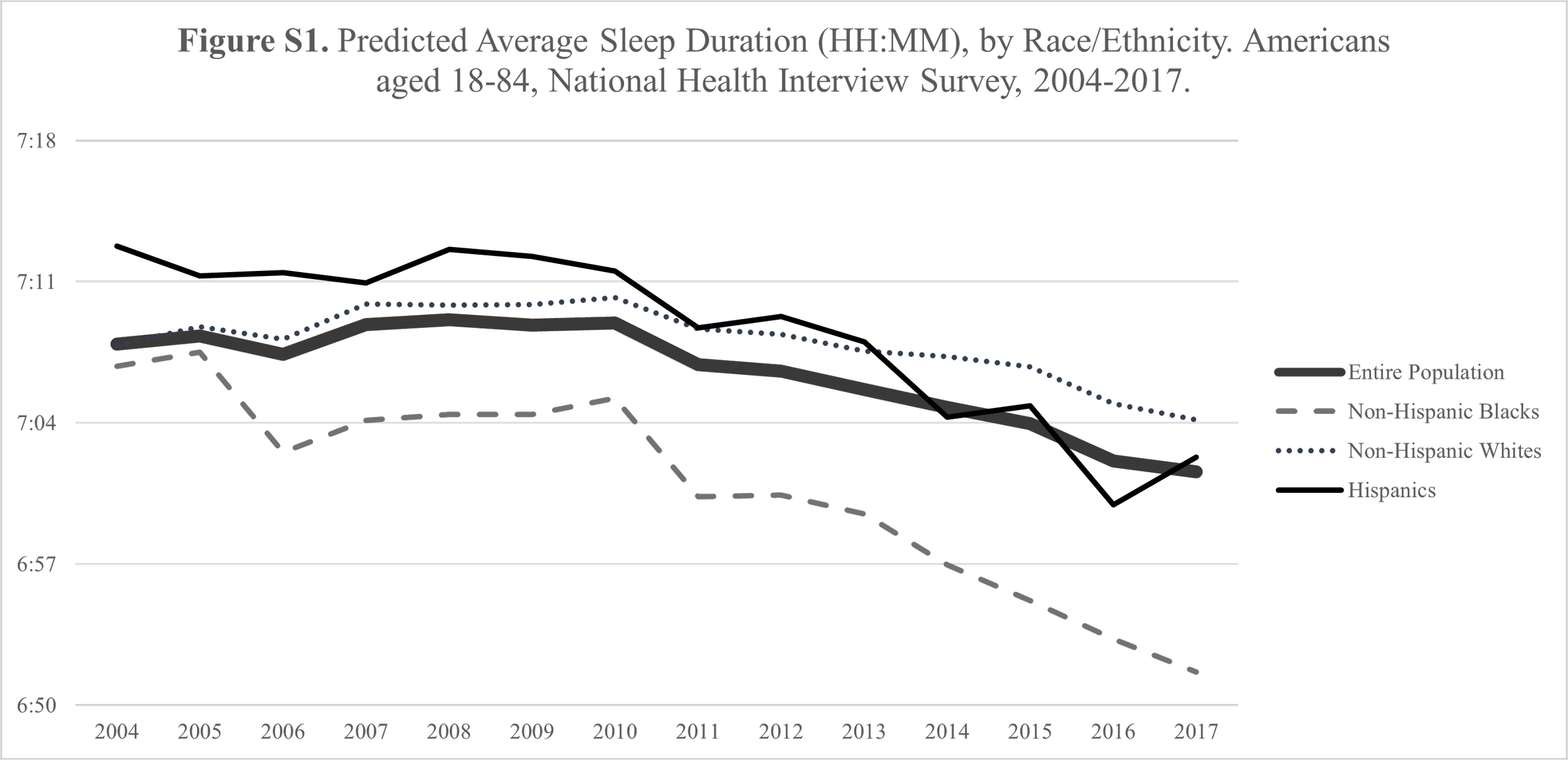
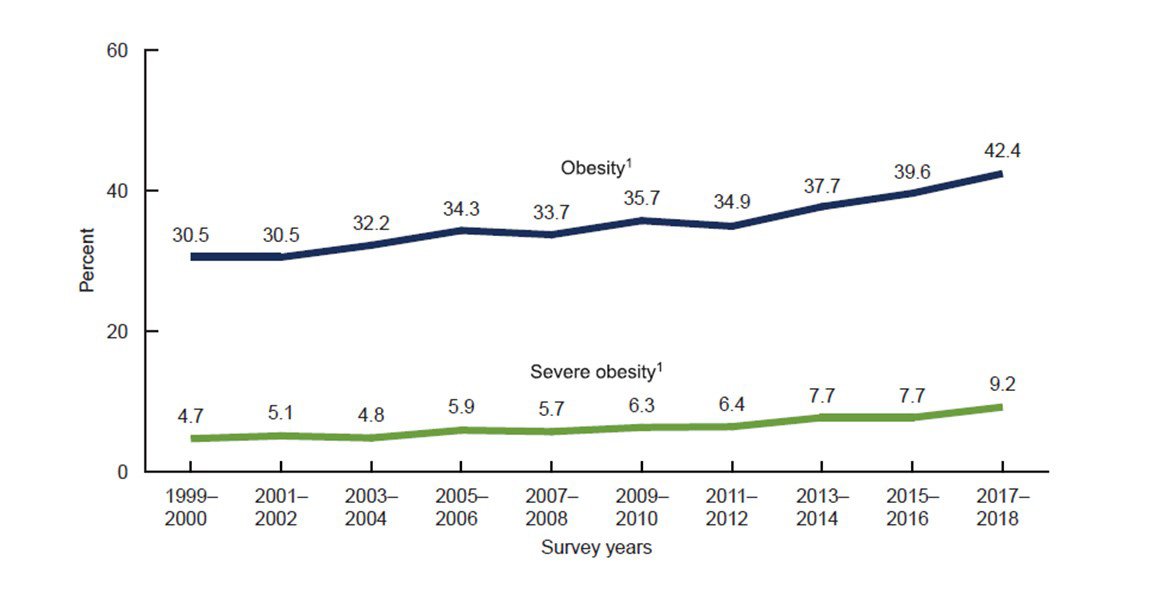
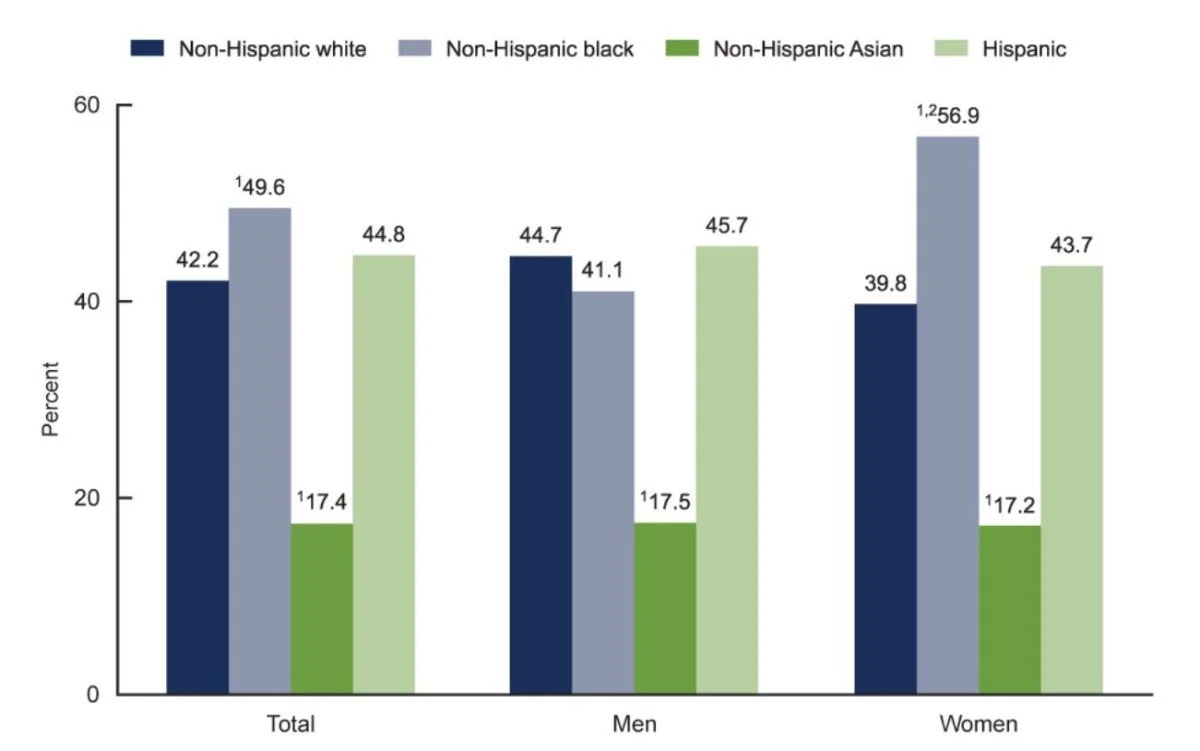
In addition to a reduction in sleep duration, we are also experiencing a reduction in sleep quality—inconsistent bedtimes, bright lights from artificial screens, and a lack of morning sunlight all contribute to poor sleep quality. The impacts of this nighttime assault are tremendous. While I’m not saying that our society-wide changes in sleeping behavior is directly causing obesity, I am confident, and the research is clear, that disturbances in sleep are contributing to this health issue.
Sleep is extremely important not just for physical and mental well-being, but also for metabolic health in particular. In fact, sleep has a huge impact on hunger by regulating the release of ghrelin, the “hunger hormone” that tells our brain we need to eat. Just one night of total sleep deprivation significantly elevates plasma ghrelin levels and, therefore, feelings of hunger. (Schmid et al., 2008) Leptin, the hormone that indicates satiety to our brains, is accordingly lower after sleep deprivation. (van Egmond et al., 2023) Neurologically, sleep deprivation blunts activity in regions of the brain (the frontal and insula cortex) that evaluate food desirability, but amplifies reactivity within the amygdala, which is known to code salience (the attention-grabbing characteristic of something) in the context of food decisions. These neural changes are associated with a significant increase in appetitive desire for weight-gain promoting (high-calorie) foods, proportional to the severity of sleep loss. (Greer et al., 2013) It's not just total sleep deprivation, either—even four hours of sleep for six nights in a row can impair glucose tolerance and elevate cortisol. (Spiegel et al., 1999) In fact, sleep loss of less than seven hours per night is associated with several chronic diseases (Colten et al., 2006), including an increased risk of obesity and type 2 diabetes. (Gomes et al., 2023) Sleep is critically important to our health.
I am a nutritionist by training, but if I could give just one piece of advice to everyone I meet, it would be to prioritize their sleep—not only trying to obtain 8 hours per night, but also building a consistent sleep routine. For anyone interested in learning much more about sleep, I highly recommend “Why We Sleep” by Matthew Walker (not sponsored). This book is easy to read, tailored for the general audience, yet extremely insightful, and was hugely beneficial for helping me understand the mechanics and importance of sleep.
Notes
*I fully understand and wholly acknowledge that GLP-1 agonists have effects outside of reducing caloric intake that support their efficacy—for example, these drugs also increase fat oxidation, resulting in higher fat loss compared to lean mass. (Ravussin et al., 2025)
**I also want to acknowledge that GLP-1 agonists can be life changing for some individuals—I do not dispute this fact, and at this point have absolutely nothing against individuals using GLP-1 agonists to help achieve their weight and health goals. However, many people are interested in simple, non-pharmacotherapy options for preventing hunger and managing weight, especially for weight maintenance after a regimen of GLP-1 agonists.
***The data on sleep duration are slightly confusing, as a recent survey by the U.S. Bureau of Labor Statistics suggested that sleep duration has increased since 2003. (U.S. Bureau of Labor Statistics, n.d.) However, this discrepancy likely has to do with how the data was collected—for example, the sleep duration data from the U.S. Bureau of Labor Statistics “includes naps and spells of sleeplessness,” which undoubtedly inflates the reported “sleep time.” In fact, we would expect “spells of sleepiness” to increase as overall sleep duration and quality decrease. How the specific questions were asked (“time in bed” versus “time asleep,” for example) likely also contributes to the observed differences.
References
American Time Use Survey. (n.d.). Bureau of Labor Statistics. Retrieved May 23, 2026, from https://www.bls.gov/tus/database.htm
Colten, H. R., Altevogt, B. M., & Research, I. of M. (US) C. on S. M. and. (2006). Extent and Health Consequences of Chronic Sleep Loss and Sleep Disorders. In Sleep Disorders and Sleep Deprivation: An Unmet Public Health Problem. National Academies Press (US). https://www.ncbi.nlm.nih.gov/books/NBK19961/
Dweck, J. S., Jenkins, S. M., & Nolan, L. J. (2014). The role of emotional eating and stress in the influence of short sleep on food consumption. Appetite, 72, 106–113. https://doi.org/10.1016/j.appet.2013.10.001
Gomes, S., Ramalhete, C., Ferreira, I., Bicho, M., & Valente, A. (2023). Sleep Patterns, Eating Behavior and the Risk of Noncommunicable Diseases. Nutrients, 15(11), 2462. https://doi.org/10.3390/nu15112462
Greer, S. M., Goldstein, A. N., & Walker, M. P. (2013). The impact of sleep deprivation on food desire in the human brain. Nature Communications, 4, 2259. https://doi.org/10.1038/ncomms3259
Keyes, K. M., Maslowsky, J., Hamilton, A., & Schulenberg, J. (2015). The Great Sleep Recession: Changes in Sleep Duration Among US Adolescents, 1991–2012. Pediatrics, 135(3), 460–468. https://doi.org/10.1542/peds.2014-2707
Knutson, K. L., Spiegel, K., Penev, P., & Van Cauter, E. (2007). The Metabolic Consequences of Sleep Deprivation. Sleep Medicine Reviews, 11(3), 163–178. https://doi.org/10.1016/j.smrv.2007.01.002
Overweight & Obesity Statistics. (n.d.). National Institute of Diabetes and Digestive and Kidney Diseases. Retrieved May 23, 2026, from https://www.niddk.nih.gov/health-information/health-statistics/overweight-obesity
Schmid, S. M., Hallschmid, M., Jauch-Chara, K., Born, J., & Schultes, B. (2008). A single night of sleep deprivation increases ghrelin levels and feelings of hunger in normal-weight healthy men. Journal of Sleep Research, 17(3), 331–334. https://doi.org/10.1111/j.1365-2869.2008.00662.x
Sheehan, C. M., Frochen, S. E., Walsemann, K. M., & Ailshire, J. A. (2018). Are U.S. adults reporting less sleep?: Findings from sleep duration trends in the National Health Interview Survey, 2004–2017. Sleep, 42(2), zsy221. https://doi.org/10.1093/sleep/zsy221
Spiegel, K., Leproult, R., & Van Cauter, E. (1999). Impact of sleep debt on metabolic and endocrine function. The Lancet, 354(9188), 1435–1439. https://doi.org/10.1016/S0140-6736(99)01376-8
van Egmond, L. T., Meth, E. M. S., Engström, J., Ilemosoglou, M., Keller, J. A., Vogel, H., & Benedict, C. (2023). Effects of acute sleep loss on leptin, ghrelin, and adiponectin in adults with healthy weight and obesity: A laboratory study. Obesity, 31(3), 635–641. https://doi.org/10.1002/oby.23616
Xu, J., Luo, L., Gamaldo, A., Verdery, A., Hardy, M., Buxton, O. M., & Xiao, Q. (2024). Trends in sleep duration in the U.S. from 2004 to 2018: A decomposition analysis. SSM - Population Health, 25, 101562. https://doi.org/10.1016/j.ssmph.2023.101562
