
Dietary Fiber
Claim
Dietary Fiber is the key to total body health! It supports gut health, reduces inflammation and cholesterol, and keeps you full for longer. More is better, and you should try to consume as much fiber as possible at every meal.
Biological Background
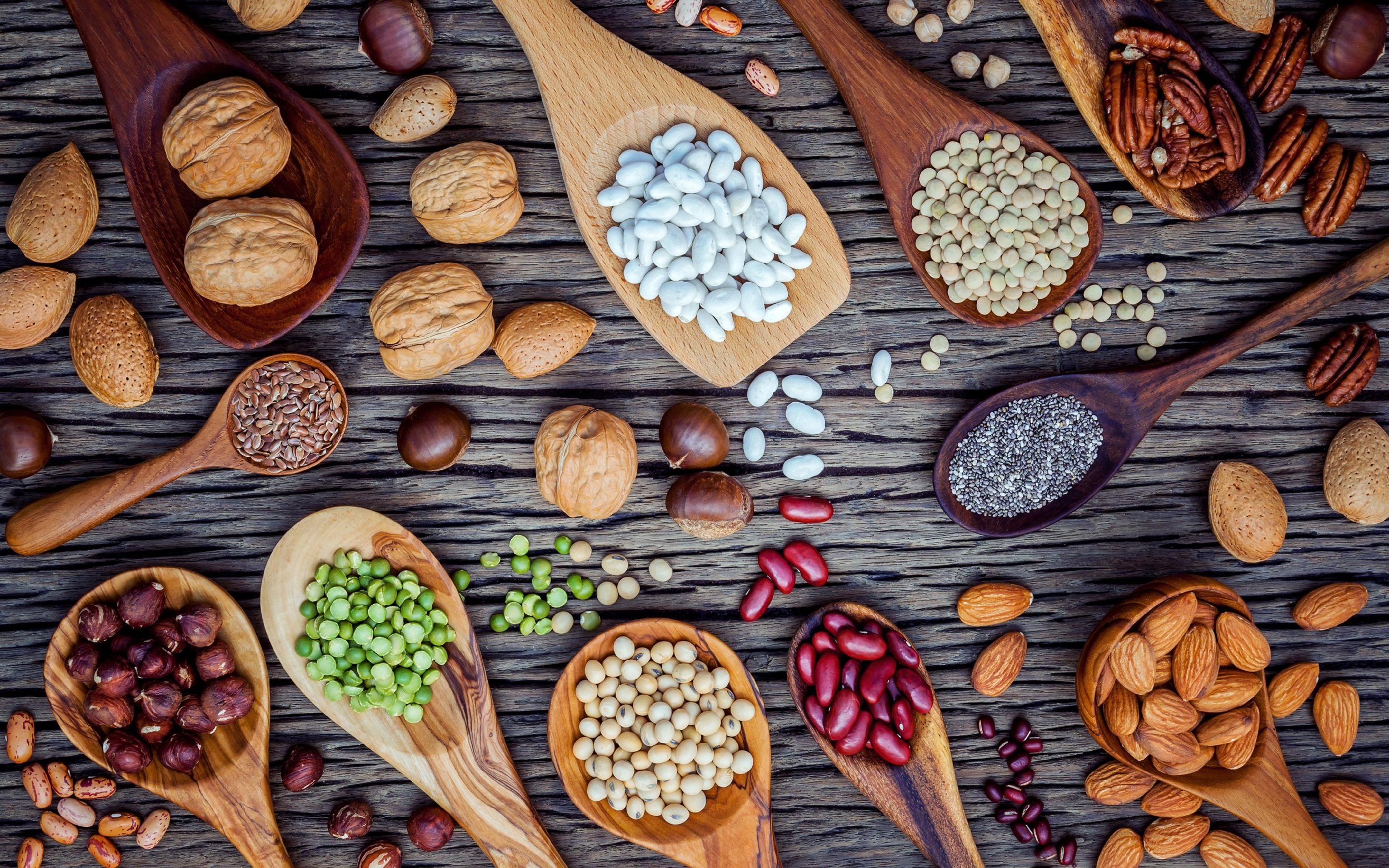
Dietary fiber is defined as nondigestible carbohydrates and lignin (a non-carbohydrate structural component in the cell walls of plants) that are intrinsic and intact (i.e., naturally occurring) in plant-based foods, or isolated or synthetic non-digestible carbohydrates determined by FDA to have physiological effects that are beneficial to human health. Thus, dietary fiber can come from the plant-based foods we eat (such as whole grains, vegetables, fruits, and nuts), or it can come in the form of supplements or food fortification of products such as protein bars.
Evidence Strength
Strong; the majority of evidence aligns with the idea that fiber consumption is, in general, quite beneficial for overall health. Dietary fiber intake is associated with metabolic health (improved blood sugar regulation and insulin sensitivity), lower body weight and waist-to-hip ratio, and improvement in gut microflora (which itself mediates numerous processes, such as appetite regulation and inflammation). (Barber et al., 2020; Ioniță-Mîndrican et al., 2022) Several different meta-analyses (that is, studies of past studies that look for overall effects) also find that dietary fiber is associated with reduced risk of cardiovascular disease, some forms of cancer, and all-cause mortality (Ramezani et al., 2024; Veronese et al., 2025).
Help vs. Harm
The majority of Americans do not consume the daily recommended fiber intake (14 g. of fiber per 1,000 kcals, so about 28 g. per day for an individual consuming a 2,000 kcal diet). In fact, the average American eats only about 15 g. of fiber per day. Despite common perceptions that fruits and vegetables are loaded with fiber, because of their high water content, a serving of fruit contains at most 3 g of fiber, and most vegetable servings contain less than 3 g of dietary fiber. Grains, since they are commonly consumed, are the leading source of fiber in the diet.
For most individuals, increasing fiber consumption is a beneficial and recommended nutrition goal. However, fiber should be added to the diet incrementally to prevent gastrointestinal distress (such as constipation or diarrhea). Furthermore, symptoms of health complications such as irritable bowel syndrome (IBS) or chronic constipation may be exacerbated by high fiber consumption. (Tan & Seow-Choen, 2007) Similarly, more fiber is not always better—consuming too much or increasing intake too rapidly can cause significant gastrointestinal distress, including severe bloating, gas, constipation, diarrhea, and abdominal cramps. Excessive fiber can also hinder the absorption of medications and vital minerals like iron, zinc, and calcium, while extremely high consumption (upwards of 150 g. per day—highly unlikely, if not impossible!) could increase the risk of colorectal cancer. (Lemons, 2024)
(NOTE: This last point was a study conducted in mice—it is not fear mongering, nor is it something you really need to be worried about—it is simply to demonstrate that there such thing as too much of a good thing! Consuming this amount of fiber would likely result in serious feelings of illness long before you were able to consume the amount that would increase the risk of cancer!)
What TikTok Doesn’t Tell You
Added fibers do not behave the same as fibers in intact plant foods.
Different fibers deliver different health benefits based on their properties, including viscosity (thickness), solubility, and fermentability, characteristics determined primarily by where the fiber is sourced from. The fiber found in plant foods can be either soluble (dissolves to form a sort of “gel” in water) or insoluble (does not dissolve in water). While much has been said about the difference between soluble and insoluble fiber, with common rhetoric being that soluble fiber decreases cholesterol levels and stabilizes blood sugar, while insoluble fiber has fecal-bulking characteristics that promote regular bowel movements and prevent constipation, it is now appreciated that the solubility of fiber has a minor role in determining physiological endpoints. (Institute of Medicine; Korzak & Slavin, 2020) Rather than trying to consume one type of fiber over another, focusing on eating a wide variety of natural plant-based fibers will be beneficial. In fact, plant food fibers are a rich source of bioactive compounds (such as phytochemicals), which provide numerous health benefits, including antioxidant activity, reducing chronic inflammation, and assisting the immune system. In fact, some of the benefits of fiber may be due to the presence of plant-derived bioactive compounds. (Timm et al., 2023)
“High fiber” does not mean the food is minimally processed.
Not surprisingly, highly processed foods tend to be worse for one’s health compared to whole foods, due not only to the addition of unhealthy ingredients, but also due to reductions in the natural properties of the food. Thus, a food that is “high fiber” may not be necessarily healthy if has a lot of added sugar, fat, or unnatural additives. Even if a product package states, “high fiber,” we should be careful to look at the nutrition panel and ingredient list to see what other things have been added.
Many products add fiber to offset refined carbohydrates rather than improve food quality.
And speaking of high fiber foods, many packaged foods add fiber to offset the net carbohydrate count of the food. You may have seen packaging that states something like the following:
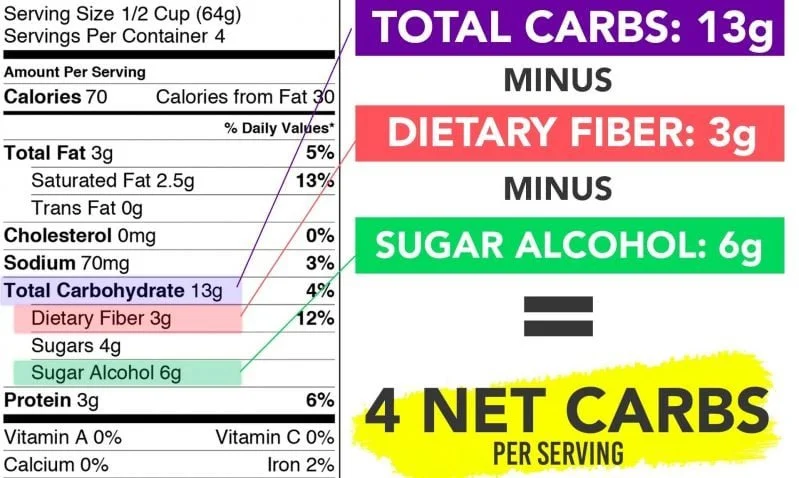
Counting net carbs is a common practice for individuals with diabetes or those following a ketogenic or other low-carb diet. Because fiber "reduces” the total carb count, fiber is often added to promote a more enticing, “low carb” product. However, as stated previously, fiber that is added to food, while beneficial, does not have the same robust health effects as fiber naturally found in foods.
Fiber supplements can help regularity but do not replicate the metabolic benefits of whole-food fiber patterns.
Fiber supplements are an isolated fiber source and do not provide may of the health benefits associated with fiber-rich meals. While the term “fiber supplement” implies that regular consumption will provide health benefits that may be missing from a low-fiber diet, for most fiber supplements this implication is not supported by clinical data. The soluble, gel-forming Psyllium is one of the minority of marketed fiber products that have been shown to provide health benefits. (McRorie et al., 2015)
Most people do not need “gut detox” or “microbiome reset” products.
Fermentable fibers act as “prebiotics” by fueling beneficial gut bacteria. These fibers are broken down in the colon, producing beneficial microbial metabolites such as short-chain fatty acids (e.g., butyrate), which improve overall gut health, suppress inflammation, regulate immunological processes, and are involved in other brain/body functions. People consuming fiber-rich diets (rural/unindustrialized diet, Mediterranean diet, or vegetarian diet) tend to have lower incidence of disease and better overall health, and are consistently found to harbor a dramatically different microbial community structure from their counterparts living in developed areas who consume a low-fiber, high fat high sugar Western diet. (Fu et al., 2022) This difference in microbial communities, a concept known as “beta diversity” of the gut microbiome, likely plays a critical role in a wide range of complex and chronic health conditions.
While the benefit of different microbiome compositions is beyond the scope of this post (and is not yet agreed upon by researchers!), the gut microbiome is generally stable in healthy adults, with a consistent, individual-specific composition that persists over time. (Schlomann & Parthasarathy, 2019) In fact, much of our microbiome composition is determined by genetics and early life influences (such as birth via vaginal vs. cesarian-section). While relatively stability, the microbiome is also temporally dynamic, undergoing frequent, temporary fluctuations in response to diet, medication, infections, and lifestyle changes. However, there is a remarkable resilience of one’s microbiome to return to its original state after environmental influences cease. (Wilmanski et al., 2022) Thus, the need for a “gut detox” or “microbiome reset” is an unnecessary marketing ploy, as the original microbiome will likely re-establish itself after the detox is over. The benefit one may feel after such a “cleanse” is typically a result of temporarily reducing processed/sugary food intake rather than a true detox of the microbiome. Along those lines, as one’s microbiome is extremely resilient, most detox products are unlikely to actually completely reset the microbiome. And if one is worried about toxins, a gut cleanse still isn’t the answer, as the body’s liver, kidneys, and digestive system already remove such pathogens more effectively than any detox. The best way to develop and maintain a healthy gut is by consistently eating fiber-rich foods, staying hydrated, and avoiding processed foods, which will support a diverse, natural microbial balance and help you to feel better in the long run. Indeed, it is consistency over time that is able to permanently shift a microbiome to a healthier composition. (Aziz et al., 2024)
Bottom Line
Fiber is a beneficial nutrient you should prioritize within your diet! Benefits include better gut health (which leads to better immunity and overall health!), improved bowel function and regularity (not a surprise), reduced risk of some diseases (such as cardiovascular disease), and improved control of blood sugar and body weight. However, fiber works best as a long-term dietary pattern, not a single nutrient to optimize every once in a while. Gradually increasing fiber—by consuming plant foods—improves metabolic and digestive health for many people, but adding fiber to highly processed foods does not automatically make them healthy. Focus on consuming a diet based around whole, natural foods, and fiber—plus the nutritious bioactive compounds that come with it—will just be there naturally!
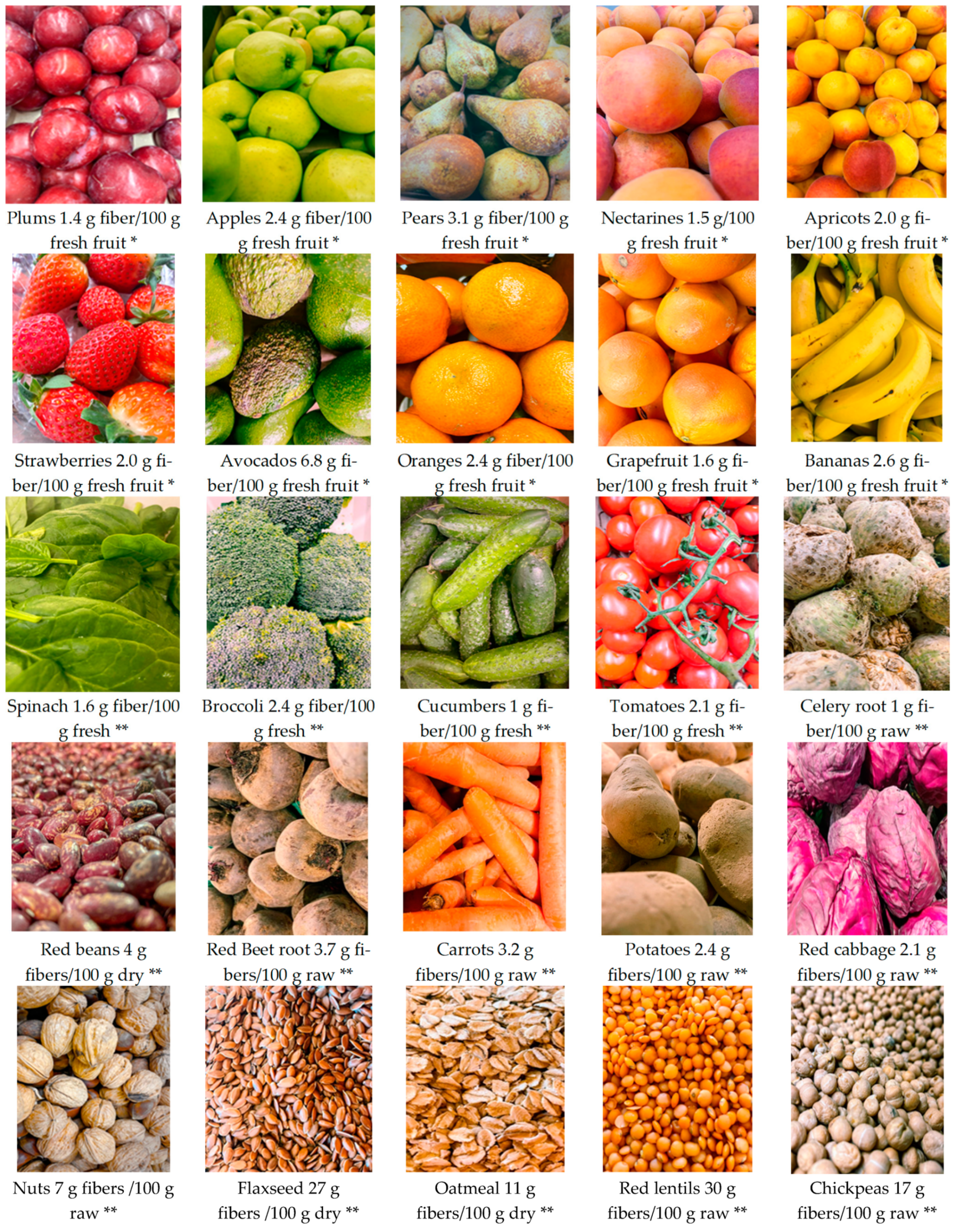
Ioniță-Mîndrican et al., 2022
References
Aziz, T., Hussain, N., Hameed, Z., & Lin, L. (2024). Elucidating the role of diet in maintaining gut health to reduce the risk of obesity, cardiovascular and other age-related inflammatory diseases: Recent challenges and future recommendations. Gut Microbes, 16(1), 2297864. https://doi.org/10.1080/19490976.2023.2297864
Barber, T. M., Kabisch, S., Pfeiffer, A. F. H., & Weickert, M. O. (2020). The Health Benefits of Dietary Fibre. Nutrients, 12(10), 3209. https://doi.org/10.3390/nu12103209
Dietary Reference Intakes: Proposed Definition of Dietary Fiber 2001. (n.d.). Institute of Medicine. Retrieved February 4, 2026, from https://www.nationalacademies.org/publications/10161
Fu, J., Zheng, Y., Gao, Y., & Xu, W. (2022). Dietary Fiber Intake and Gut Microbiota in Human Health. Microorganisms, 10(12), 2507. https://doi.org/10.3390/microorganisms10122507
Ioniță-Mîndrican, C.-B., Ziani, K., Mititelu, M., Oprea, E., Neacșu, S. M., Moroșan, E., Dumitrescu, D.-E., Roșca, A. C., Drăgănescu, D., & Negrei, C. (2022). Therapeutic Benefits and Dietary Restrictions of Fiber Intake: A State of the Art Review. Nutrients, 14(13), 2641. https://doi.org/10.3390/nu14132641
Korczak, R., & Slavin, J. L. (n.d.). Definitions, regulations, and new frontiers for dietary fiber and whole grains. Retrieved February 4, 2026, from https://dx.doi.org/10.1093/nutrit/nuz061
Lemons, J. M. S. (2024). Too Much of a Good Thing: Imposing an Upper Limit to a High Fiber Diet. Gastroenterology, 166(2), 250–251. https://doi.org/10.1053/j.gastro.2023.11.290
McRorie, J. W. (2015). Evidence-Based Approach to Fiber Supplements and Clinically Meaningful Health Benefits, Part 1. Nutrition Today, 50(2), 82–89. https://doi.org/10.1097/NT.0000000000000082
Ramezani, F., Pourghazi, F., Eslami, M., Gholami, M., Mohammadian Khonsari, N., Ejtahed, H.-S., Larijani, B., & Qorbani, M. (2024). Dietary fiber intake and all-cause and cause-specific mortality: An updated systematic review and meta-analysis of prospective cohort studies. Clinical Nutrition, 43(1), 65–83. https://doi.org/10.1016/j.clnu.2023.11.005
Schlomann, B. H., & Parthasarathy, R. (2019). Timescales of gut microbiome dynamics. Current Opinion in Microbiology, 50, 56–63. https://doi.org/10.1016/j.mib.2019.09.011
Tan, K.-Y., & Seow-Choen, F. (2007). Fiber and colorectal diseases: Separating fact from fiction. World Journal of Gastroenterology : WJG, 13(31), 4161–4167. https://doi.org/10.3748/wjg.v13.i31.4161
Timm, M., Offringa, L. C., Van Klinken, B. J.-W., & Slavin, J. (2023). Beyond Insoluble Dietary Fiber: Bioactive Compounds in Plant Foods. Nutrients, 15(19), 4138. https://doi.org/10.3390/nu15194138
Veronese, N., Gianfredi, V., Solmi, M., Barbagallo, M., Dominguez, L. J., Mandalà, C., Di Palermo, C., Carruba, L., Solimando, L., Stubbs, B., Castagna, A., Maggi, S., Zanetti, M., Al-Daghri, N., Sabico, S., Nucci, D., Gosling, C., & Fontana, L. (2025). The impact of dietary fiber consumption on human health: An umbrella review of evidence from 17,155,277 individuals. Clinical Nutrition, 51, 325–333. https://doi.org/10.1016/j.clnu.2025.06.021
Wilmanski, T., Gibbons, S. M., & Price, N. D. (2022). Healthy aging and the human gut microbiome: Why we cannot just turn back the clock. Nature Aging, 2(10), 869–871. https://doi.org/10.1038/s43587-022-00294-w
Yang, J., Wei, H., Lin, Y., Chu, E. S. H., Zhou, Y., Gou, H., Guo, S., Lau, H. C. H., Cheung, A. H. K., Chen, H., To, K. F., Sung, J. J. Y., Wang, Y., & Yu, J. (2024). High Soluble Fiber Promotes Colorectal Tumorigenesis Through Modulating Gut Microbiota and Metabolites in Mice. Gastroenterology, 166(2), 323-337.e7. https://doi.org/10.1053/j.gastro.2023.10.012
