
Seed Oils
The Claim: Seed oils are toxic, and consumption causes inflammation leading to weight gain, acne, infertility, and even cancer. Avoid them at all costs.
TL;DR: Seed oils contain polyunsaturated fatty acids (PUFAs), which include the highly debated linoleic acid (a type of omega-6 fatty acid). While the scientific dogma has long been that omega-6 fatty acids are inflammatory (compared to the non-inflammatory omega-3 fatty acids), there actually exists a lot more nuance to this argument. Linoleic acid is an essential fatty acid necessary to obtain from the diet in order to promote optimal cellular functioning. In fact, studies have demonstrated benefits of higher linoleic acid blood levels for reducing cardiovascular events and total mortality. Further, increased linoleic acid does not appear to increase inflammation. The detriment so often associated with linoleic acid (and seed oils in general) likely stems from the overconsumption of processed and fast foods (which almost always contain high amounts of seed oils—i.e., linoleic acid) in the American diet. Because a high fat high sugar diet is consistently and strongly associated with health detriments, reducing the intake of these foods (and, by association, also reducing the consumption of seed oils) will very likely result in better overall health. Rather than demonizing seed oils, we should focus on consuming less processed and fast foods in general—if this means cooking with seed oils at home, don’t fret about it!! The benefits of home cooking will far outweigh any potential negative from consuming linoleic acid.
The Whole Story
Seed oils are cooking oils extracted from plant seeds such as canola, sunflower, corn, and soybean. These oils are primarily composed of unsaturated fats, meaning the lipid chain that composes the fat molecule has kinks due to the presence of double bonds. This is in contrast to saturated fats, whose lipid chains are completely saturated with hydrogen atoms and are therefore straight, with no kinks.
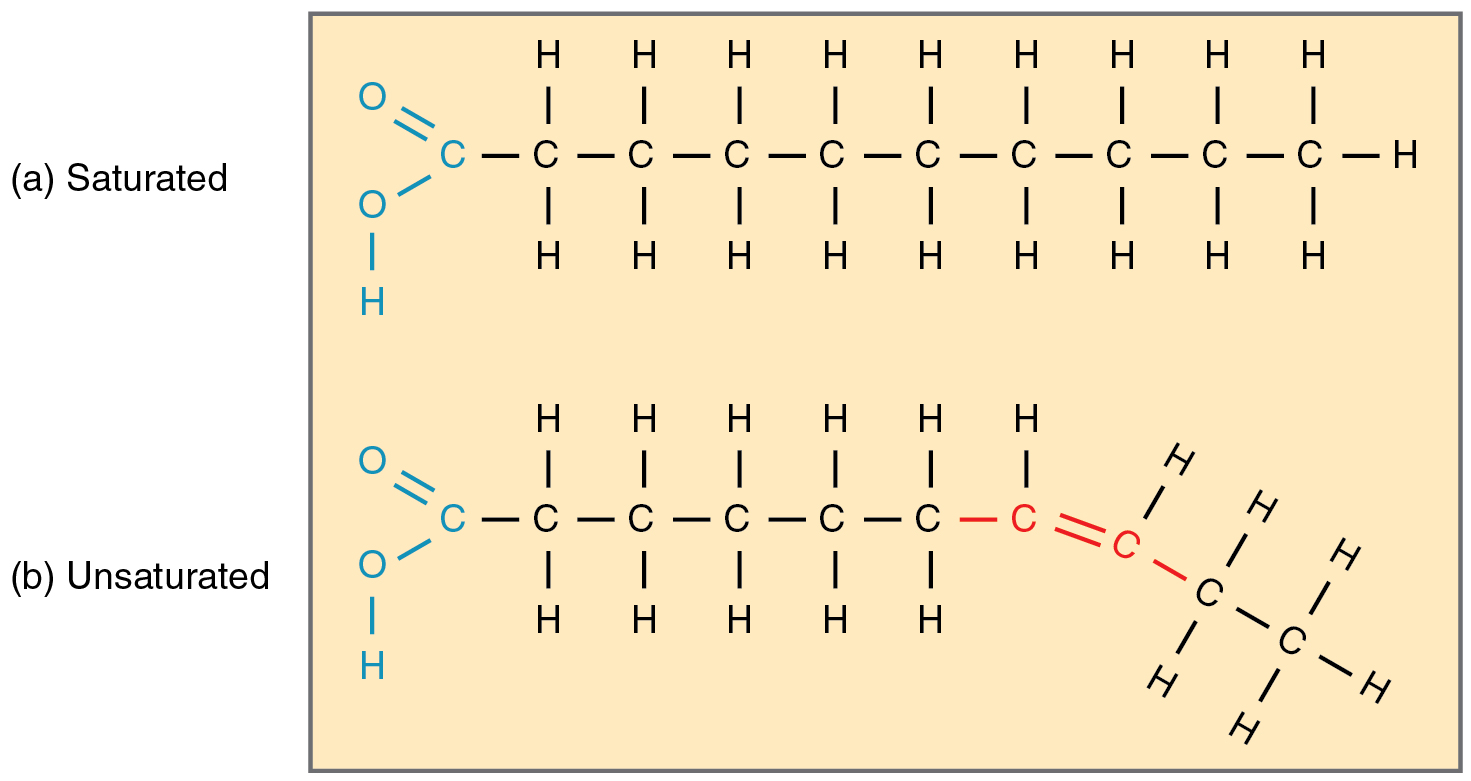
While the biochemical structure of fats is not particularly necessary for you to know, it allows us to understand why unsaturated fats are liquid at room temperature (e.g., olive oil, vegetable oil, avocado oil) and saturated fats are solid (e.g., butter, lard, coconut oil). If you imagine two unsaturated fat molecules in close proximity, we can see that, due to the kinks caused by those unsaturated bonds, the molecules are not able to pack tightly together, and thus the molecules kind of float around as a liquid. The straight structure of saturated fats, on the other hand, allows them to pack together closely, forming a tightly bonded solid at room temperature.
Now back to seed oils—these oils are rich in unsaturated fats, specifically polyunsaturated fats (PUFAs), meaning they have multiple double bond “kinks” in their structure). PUFAs include omega-6 fatty acids such as linoleic acid. Interestingly, PUFAs, and linoleic acid in particular, have been shown to be beneficial for cardiovascular health. In fact, linoleic acid is known as an essential fatty acid, necessary to consume from the diet in order to support healthy cell functioning. According to a recent (2024) review on the subject, “strong and consistent evidence demonstrates that higher intake of PUFAs is associated with lower risk of incident cardiovascular disease.” The authors of this study also found that replacement of saturated fats with PUFAs reduces the risk of coronary artery disease events and cardiovascular disease mortality.1 These findings have been replicated in other reviews as well, in which higher blood levels of linoleic acid were associated with lower risk of coronary heart disease, stroke, type-2 diabetes, and total mortality.2,3 High linoleic acid levels also lower total and low-density lipoprotein (LDL) cholesterol when compared with saturated fatty acids and carbohydrates.2 Further, linoleic acid has not been shown to be associated with increased inflammation in a number of studies on the topic.4,5
Thus, from what we read above, it appears relatively clear that linoleic acid, a PUFA derived from seed oils, is not detrimental to our health, and in fact is probably beneficial (at least compared to saturated fats!). So why all the fuss? Well, the fright and confusion arises for three major reasons: 1.) The amount of PUFAs that the average American consumes daily, 2.) the “ideal” ratio of omega-6 to omega-3 fatty acids, and 3.) the presence of high amounts of seed oils in processed foods.
In order to prevent metabolic deficiencies, humans require about 1-2% of their total daily calories to come from linoleic acid. However, due to the prevalence of linoleic acid in the Western diet typical of many Americans, current intakes are closer to 7%.6,7 Such a high level of linoleic acid can lead to what’s known as lipid peroxidation—essentially, the degradation of the linoleic acid molecule, resulting in the formation of reactive peroxide molecules (specifically referred to as OXLAMs, which you can do a deep dive about elsewhere if you’re interested!). In short, these byproduct have the potential to damage cellular structures, including DNA, mitochondria, cell membranes, proteins, and stem cells.8 Hence the fear many of us have heard about seed oils. But is there truly a reason to be afraid? Typically, antioxidants such as Vitamin E, Coenzyme Q10, and other enzymes like glutathione peroxidase neutralize these reactive radical molecules, rendering them unharmful. (In fact, a diet deficient in Vitamin E but high in linoleic acid can result in neurodegeneration.9) But here again, overconsumption of linoleic acid has the potential to overwhelm the body’s antioxidant capacity, possibly resulting in cellular damage.
In the 1990’s, it was popularized that a high ratio of omega-6 (such as linoleic acid) to omega-3 (such as eicosapentaenoic acid—EPA—and docosahexaenoic acid—DHA—fatty acids you may have heard of, found in fatty fish and algae) was deleterious for one’s health. As the thinking went, high levels of linoleic acid would prevent the conversion of alpha linoleic acid (an omega-3 fatty acid) to EPA and DHA, which are known to be associated with numerous health benefits (having anti-inflammatory effects and aiding function in the heart, brain, and eyes).10 However, it has since been shown that it is likely not high levels of omega-6 that cause inflammation, but low levels of omega-3.
Seed oils likely get a bad rap because they are prevalent in many highly processed foods. Unlike the controversy over seed oils, it is relatively well-recognized that processed foods—containing high amounts of sugars, fats, and other chemical modifiers—lead to weight gain, inflammation, fatty liver disease, insulin resistance, and numerous other complications.11–13 Thus, if one were to lower their consumption of seed oils, and in the process lower their consumption of processed or fast food items, it is almost certain to improve overall health, simply due to the reduction in total sugar/fat intake.
One more important thing to note—cooking with seed oils. An important factor in the health or harm of oils is the production of byproducts caused by heating the oils to high cooking temperatures. Due to the double bonds in their chemical structure, PUFAs can undergo oxidation when cooked at high heat for prolonged periods of time, forming harmful compounds (similar to that discussed above). However, many refined seed oils have high smoke points and are not highly oxidized unless used repeatedly under very high heat,14 making them suitable for frying, roasting, and baking. A good rule of thumb is not to reuse oils when cooking at home! An even better option for cooking is avocado oil, a “fruit oil” composed primarily of monounsaturated fats (MUFAs) and having a very high smoke point, typically ranging from 480°F to 520°F. Olive oil, another MUFA, is also a great option for cooking, as it contains minor constituents that prevent fatty acid and vitamin oxidation when heated (despite a slightly lower smoke point of ~400°F.15
So… What’s the takeaway here? Are seed oils (i.e., linoleic acid) good or bad? The answer is, “yes”! (I know—don’t you love it when people say that?!) But truly, as with literally everything in life, it is about balance. One doesn’t need to worry about consuming enough linoleic acid in their diet, as this type of fatty acid is abundant. One also probably doesn’t need to worry about overconsuming seed oils (or linoleic acid, in particular). Our goal should be to limit processed and fast food intake, which will lower our overall sugar and fat intake and will have a much bigger impact on our health than avoiding seed oils! In general, consuming or cooking with plant-based oils is preferential to using saturated animal fats, as replacing saturated fats with unsaturated fats has been shown to reduce the risk of coronary heart disease (another controversial topic, for another time!).16,17
References
1. Petersen, K. S. et al. Perspective on the health effects of unsaturated fatty acids and commonly consumed plant oils high in unsaturated fat. Br. J. Nutr. 132, 1039–1050.
2. Jackson, K. H., Harris, W. S., Belury, M. A., Kris-Etherton, P. M. & Calder, P. C. Beneficial effects of linoleic acid on cardiometabolic health: an update. Lipids Health Dis. 23, 296 (2024).
3. Wu, J. H. et al. Circulating Omega-6 Polyunsaturated Fatty Acids and Total and Cause-Specific Mortality: The Cardiovascular Health Study. Circulation 130, 1245–1253 (2014).
4. Johnson, G. H. & Fritsche, K. Effect of Dietary Linoleic Acid on Markers of Inflammation in Healthy Persons: A Systematic Review of Randomized Controlled Trials. J. Acad. Nutr. Diet. 112, 1029-1041.e15 (2012).
5. Fritsche, K. L. Too much linoleic acid promotes inflammation—doesn’t it? Prostaglandins Leukot. Essent. Fatty Acids 79, 173–175 (2008).
6. Blasbalg, T. L., Hibbeln, J. R., Ramsden, C. E., Majchrzak, S. F. & Rawlings, R. R. Changes in consumption of omega-3 and omega-6 fatty acids in the United States during the 20th century123. Am. J. Clin. Nutr. 93, 950–962 (2011).
7. Raatz, S. K., Conrad, Z. & Jahns, L. Trends in linoleic acid intake in the United States adult population: NHANES 1999–2014. Prostaglandins Leukot. Essent. Fatty Acids 133, 23–28 (2018).
8. Mercola, J. & D’Adamo, C. R. Linoleic Acid: A Narrative Review of the Effects of Increased Intake in the Standard American Diet and Associations with Chronic Disease. Nutrients 15, 3129 (2023).
9. Taha, A. Y. Linoleic acid–good or bad for the brain? Npj Sci. Food 4, 1 (2020).
10. Swanson, D., Block, R. & Mousa, S. A. Omega-3 Fatty Acids EPA and DHA: Health Benefits Throughout Life1. Adv. Nutr. 3, 1–7 (2012).
11. Henney, A. E., Gillespie, C. S., Alam, U., Hydes, T. J. & Cuthbertson, D. J. Ultra-Processed Food Intake Is Associated with Non-Alcoholic Fatty Liver Disease in Adults: A Systematic Review and Meta-Analysis. Nutrients 15, 2266 (2023).
12. Monda, A. et al. Ultra-Processed Food Intake and Increased Risk of Obesity: A Narrative Review. Foods 13, 2627 (2024).
13. Babalola, O. O. et al. The impact of ultra-processed foods on cardiovascular diseases and cancer: Epidemiological and mechanistic insights. Asp. Mol. Med. 5, 100072 (2025).
14. Yılmaz, B., Şahin, T. Ö. & Ağagündüz, D. Oxidative Changes in Ten Vegetable Oils Caused by the Deep-Frying Process of Potato. J. Food Biochem. 2023, 6598528 (2023).
15. Lozano-Castellón, J., Rinaldi de Alvarenga, J. F., Vallverdú-Queralt, A. & Lamuela-Raventós, R. M. Cooking with extra-virgin olive oil: A mixture of food components to prevent oxidation and degradation. Trends Food Sci. Technol. 123, 28–36 (2022).
16. Li, Y. et al. Saturated Fat as Compared With Unsaturated Fats and Sources of Carbohydrates in Relation to Risk of Coronary Heart Disease: A Prospective Cohort Study. J. Am. Coll. Cardiol. 66, 1538–1548 (2015).
17. Kris-Etherton, P. M. & Krauss, R. M. Public health guidelines should recommend reducing saturated fat consumption as much as possible: YES. Am. J. Clin. Nutr. 112, 13–18 (2020).
