
Adolescent GLP-1 Receptor Agonists
GLP-1 receptor agonists (GLP-1RAs) are now widely popular for weight loss, glycemic control, and cardiovascular health. In fact, these drugs are so effective that they are FDA approved for the treatment of obesity in adolescents as young as 12 years old! While highly effective for resolving obesity in this age group, the developmental questions and long-term effects have yet to be investigated. Herein, we discuss what is known about GLP-1RA use in adolescents, as well as what critical outcomes are lacking.
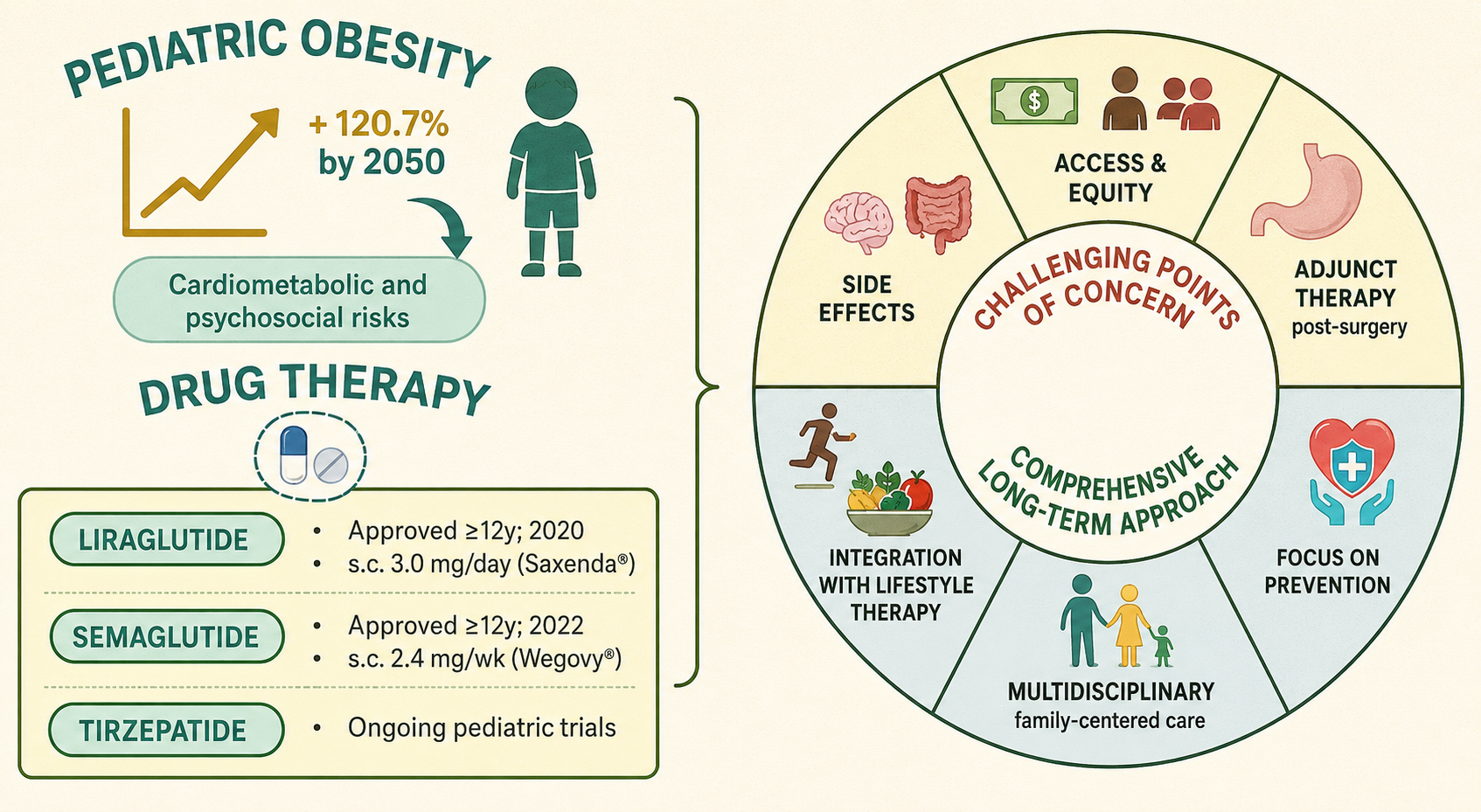
GLP-1 receptor agonists in pediatric obesity. Abodi et al., 2026.
It goes without saying that obesity is a significant health challenge in our society. This is particularly true for adolescents with obesity, which is strongly related to disease risk. Adolescents with obesity are also very likely to have obesity in adulthood, which is associated with numerous deleterious health consequences. In fact, obesity is the leading cause of disease in our society! Due to this obesity epidemic, there is much excitement and potential for the use of GLP-1RA medications. Using these drugs to reduce the prevalence of obesity in adolescence may prevent the development of metabolic disease and lead to overall greater health in both adolescence and adulthood. But how do they work, and what is known about their effect specifically in adolescents?
GLP-1RAs robustly reduce food intake, anywhere from 16-49% from baseline. Due to this reduction in food consumption (primarily stemming from reductions in appetite), these drugs significantly reduce body weight, ranging from ~5-15% in both the adult and adolescent populations. GLP-1RA users also experience improvements in cardiovascular function and other markers of metabolic health. One question that often arises from conversations about GLP-1RAs is their impact on body composition, specifically lean/muscle mass. In adults, GLP-1RAs do reduce lean mass; however, this is not to a greater degree than that experienced from any other type of weight loss. In fact, GLP-1RAs appear to have a small protective effect against lean mass loss compared to caloric restriction. In any case, the majority of clinical trials demonstrate a much higher reduction in fat mass compared to lean mass, leading to an improvement in lean to fat mass ratio. Furthermore, if exercise is incorporated into the weight loss regimen, lean mass can actually increase with concomitant reductions in body weight and fat mass! Unfortunately, the small number of clinical trials that have been conducted in adolescents do not analyze body composition, a prominent gap in the literature.
Adolescence is a period of rapid physical and cognitive growth: About 40% of bone mass is accrued during this period, and the amount of bone developed in adolescence predicts later risk for osteopenia and osteoporosis. Lean mass is also rapidly accumulated, which plays a vital role in reducing metabolic risks and improving overall health. A significant decrease in food intake during adolescence may lead to deficiencies in vital nutrients necessary for proper growth. Previous research has also found that dieting during adolescence predicts higher BMI in adulthood, regardless of BMI during adolescence. GLP-1RAs, through reductions in caloric intake, mimic a dieting-type paradigm, especially given the high rates of discontinuation and re-administration of this medication, which leads to body weight cycling. Thus, whether GLP-1RAs during adolescence also predict higher BMI in adulthood is yet unknown.
Numerous brain regions and circuits, including those involved in food intake control (e.g., prefrontal cortex and hippocampus) and emotional regulation (e.g., amygdala), also exhibit critical periods of maturation during adolescence. Because GLP-1RAs impact reward circuitry in the brain, part of the mechanism by which they reduce food intake, it is critical to understand if activation of these pathways permanently alters the brain’s response to hunger and satiety. For example, if used during adolescence, do these drugs change food preference in adulthood, or potentially prevent appropriate detection of hunger or satiety signals? Furthermore, whether or not the modulation of neural reward circuits modifies responses to other typically pleasureful activities remains unknown. Currently, the research suggests no indications of depression or suicidality for adolescents using GLP-1RAs. However, many factors could influence this finding—adolescents with obesity are more likely to be bullied in school, and significant weight loss may therefore drastically improve quality of life for these individuals. This, in and of itself, may actually lead to GLP-1RAs reducing depression, although this remains to be empirically tested.
The receptors for GLP-1(RAs) are located broadly throughout the body, including on the reproductive organs. Although it is well known that obesity negatively affects hormonal health and reproductive function, and that weight loss significantly improves these measures, it is unknown if the direct action of GLP-1RAs on the ovaries or testes could change pubertal timing, progression, or development. This question is particularly relevant for the adolescent population, given the significant developmental changes occurring during this period. One prominent question, for example, is whether GLP-1RAs during adolescence will impact fertility or ability to conceive in adulthood. While the current research does not seem to indicate reproductive impairment, because these medications are relatively new, especially in terms of their widespread use, this has yet to be established.
Another interesting question relates to the idea of high fat high sugar diet intake as an addiction. While this topic is highly debated, if true, the risk of addiction (in general) is much greater when exposure occurs during childhood. Thus, if we prevent high fat high sugar diet intake during this period, is there a long-term benefit for improving healthy dietary patterns in adulthood? These questions, and many others, need to be carefully investigated to ensure the acute and long-term safety of these medications when used in young population.
Overall, GLP-1RAs are an extremely promising tool for treating adolescents with obesity. The medications significantly reduce body weight, leading to improvements in overall health and well-being. However, many unknowns regarding the use of these drugs in adolescents exist. Effects on body composition, including bone mineral density; cognitive function; and long-term implications for susceptibility to obesity in adulthood remain to be studied. While the current FDA regulations promote the approach to “shoot the alligator closest to the boat,” that is, deal with the most pressing problem (obesity) first and address potential side effects later, we should prioritize carefully analyzing benefits and possible consequences as the use of these drugs continues to expand to more people and even younger populations.
