
Myo-Inositol for Fertility
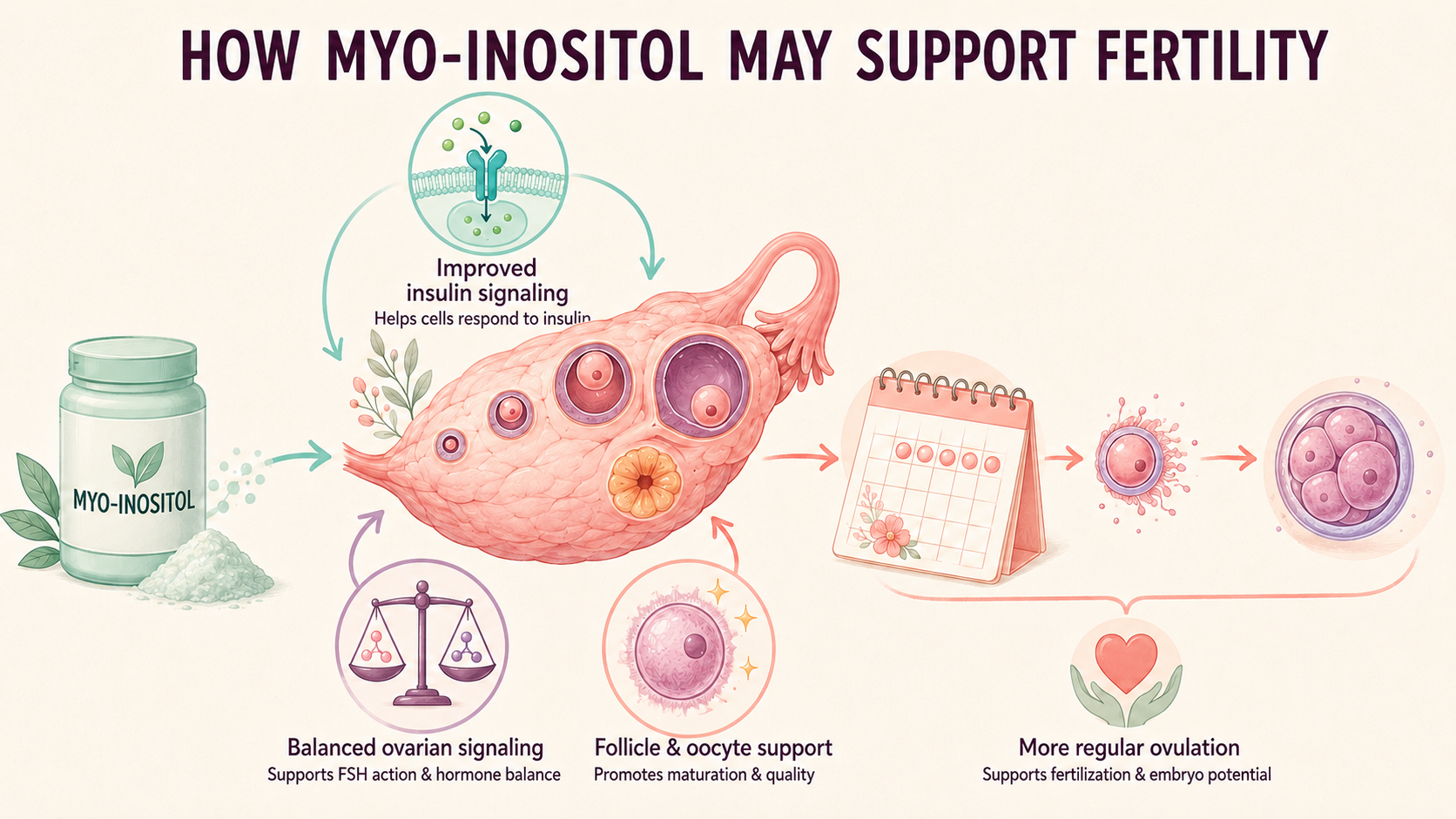
Myo-inositol plays a critical role in cellular signaling processes, including those highly involved in ovulation and general hormone balance. (Image created with ChatGPT.)
You know that saying that you shouldn’t consume something if you don’t recognize it or can’t pronounce it? Well, although myo-inositol may appear to be an unrecognizable and artificial ingredient, this compound is actually naturally and ubiquitously found in all biologic organisms, and plays a critical role in cellular signaling. You may have also heard of this compound as one of the primary ingredients in fertility supplements. So, what is it, and how does it help with fertility?
Technically, myo-inositol is a sugar alcohol—that is, a specific form of carbohydrate that structurally mimics both a sugar and an alcohol. However, don’t let this biochemical definition scare you; myo-inositol is not “bad” for you, nor does it cause intoxication. Myo-inositol is actually one of nine possible types of inositol. This type of inositol is the most abundant type in mammals, and is commonly found in almost every tissue, particularly in brain, blood, fat, kidney, lung, ovaries, and testes, where it localizes in cell membranes. The other physiologically relevant type is known as D-chiro-inositol, which is also commonly detectable as a minor constituent in almost all tissues containing myo-inositol.
Inositols are primarily involved in cellular signaling cascades, transmitting extracellular stimuli to cellular organelles. This “inositol cascade” is involved in the signaling of insulin, follicle selection and maturation, and neural tube formation during embryogenesis. While proper glucose maintenance through insulin signaling is in and of itself quite important for fertility and pregnancy, the role of inositol in responding to FSH and LH is directly crucial for ovulation. Thus, obtaining and maintaining proper inositol levels may be a key player in supporting healthy endocrine function and, ultimately, successful fertility and gestation (Gambioli et al., 2021).
Numerous clinical studies have supported the beneficial role of myo-inositol for the induction of ovulation, regularization of menstrual cycle, or the pursuit of pregnancy. In fact, treatment with 2,000 mg of myo-inositol twice a day consistently increases ovulation rates and regular menstrual cycles, as well as improves outcomes as a pretreatment for women undergoing IVF (improving oocyte and embryo quality). Further, myo-inositol supplementation significantly reduces the incidence of gestational diabetes in women with Polyendocrine Metabolic Ovarian Syndrome (PMOS; formerly known as PCOS), Type 2 Diabetes, obesity, or hyperglycemia. Equally as important, for women with a previous pregnancy affected by folate-resistant neural tube defect, daily supplementation with 500 to 1,000 mg of myo-inositol from at least two months before and until 60 days after conception prevented the incidence of neural tube defects (Gambioli et al., 2021).
Thus, it is apparent that myo-inositol plays a crucial role in fertility and in supporting physiological gestation. While this sugar alcohol is naturally present in fruits, beans, grains, and nuts (Clements & Darnell, 1980), and most healthy individuals needn’t worry about proper intake, women who are pregnant or are trying to become conceive, as well as those attempting to regulate their menstrual cycle or those with infertility, would very likely benefit from myo-inositol supplementation. If this is you, be sure to talk to your doctor for best practices and combining this supplement with any current medications!
References
Clements, R. S., & Darnell, B. (1980). Myo-inositol content of common foods: Development of a high-myo-inositol diet. The American Journal of Clinical Nutrition, 33(9), 1954–1967. https://doi.org/10.1093/ajcn/33.9.1954
Gambioli, R., Forte, G., Buzzaccarini, G., Unfer, V., & Laganà, A. S. (2021). Myo-Inositol as a Key Supporter of Fertility and Physiological Gestation. Pharmaceuticals, 14(6), 504. https://doi.org/10.3390/ph14060504
